Kallas’ apartheid characterization of Israel is overdue but welcomed
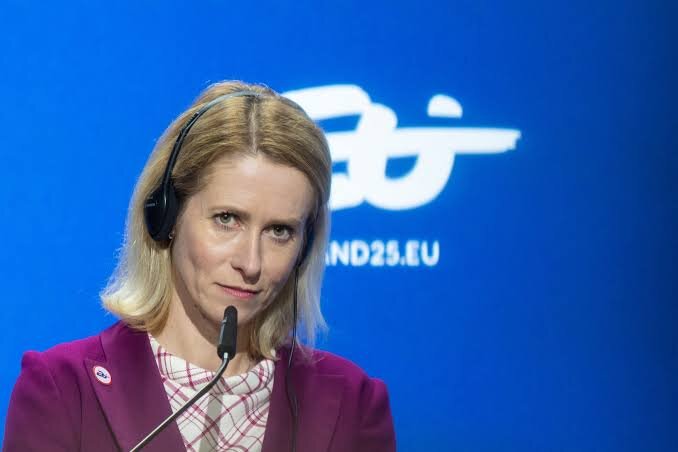
TEHRAN - Kaja Kallas, the European Union foreign policy chief, has come under attack by Euractive for comparing Israel to South Africa’s racist apartheid era during high-level talks in Mexico. It argued that she has broken ranks with the EU's official foreign policy and deepened the controversy surrounding her leadership.
Kallas, a former Estonian prime minister, travelled to Mexico City from 20 to 22 May as part of a senior EU delegation attending a major summit in the country.
During closed-door and confidential meetings with Mexican government representatives, Kallas compared Israel’s treatment of Palestinians in Gaza and the West Bank to the racist apartheid policies of South Africa, which ended in the early 1990s.
Officials and diplomats, including those present at the meeting, told Euractiv that she described how moved she was by a visit last year to South Africa and its apartheid museum in the capital, Johannesburg.
“The accusation that Israel’s policies and military action, following the attacks by Hamas in October 2023, are rooted in an apartheid-type policy of racism towards Palestinians, or Arabs, is highly controversial,” Euractiv claimed.
There are two important points to mention: First, what was the root cause of the October 7 attack in 2023? Second, was the Israeli response proportionate to the attack, or did it turn out into a genocidal campaign against the people of Gaza?
Euractiv also claimed that while there is some “sympathy” from the Irish and Spanish governments, other EU countries, including Germany and France, have steered well clear of such claims.
It should be noted that, with the exception of Germany, this argument is largely unconvincing. Germany's position is often explained by its historical responsibility for the persecution and genocide of Jews during World War II, and it remains one of
Israel's strongest supporters after the United States. However, Germany's historical guilt does not justify silence in the face of the suffering of Palestinians, nor does it justify the continued supply of advanced weapons to Israel during the conflict. More fundamentally, Palestinians should not be made to bear the consequences of crimes committed by the Nazi regime against the Jewish people, nor should they be subjected to discrimination or unequal treatment because of that history.
Also, it is due to the silence and support of certain Western countries that Israel has not been held accountable for its crimes against the Palestinians.
In South Africa, blacks were separated from the whites, but the situation facing Palestinians is worse. They have been driven out of their homes, and millions of them are now living in refugee camps in certain Arab countries. The policy of displacing Palestinians from their homes is continuing. Just recently, Israeli Prime Minister Benjamin Netanyahu told a campaign rally that now 60 percent of the Gaza Strip, which is just about 365 square kilometers, has been captured, and a plan is underway to extend it to 70 percent.
An EU diplomat has also said, “The EU is critical of Israel and supports a two-state solution. The comparison with apartheid is unacceptable and not EU policy.”
The European Union says it stands for human dignity, freedom, democracy, equality, the rule of law, and human rights. If that is truly the case, what has happened to the dignity of Palestinians? If the EU is genuinely committed to the rule of law and the protection of human rights, why should Kallas face harsh criticism for stating that Israel is practicing apartheid against Palestinians when Palestinians are being displaced from their homes in the West Bank and their land is being taken over by Israeli settlers? Such criticism appears difficult to reconcile with the EU's professed commitment to human dignity, equality, and international law.
In view of the criticism against Kallas for remarks about Israel, either the EU has a double-standard approach toward the rule of law, human rights, dignity, etc., or the EU is not standing for these principles, or Israel is “above the law”.
From now on, one should wait for slanders, such as antisemitic, against Kallas for truly saying Israel is practicing apartheid against Palestinians.
For example, The Times of Israel ran a headline that read “EU’s Kaja Kallas Joins Antisemitism Bandwagon with Apartheid Comment”. The newspaper also said, “Kallas is not the only misinformed politician; they are rampant as they listen to mainstream news that adopts narratives and disinformation seeded by Iran into various networks.”
If the killing of more than 72,500 Palestinians in the Gaza Strip, the starvation of 2.3 million people, the deprivation of clean water, the destruction of hospitals, and the denial of other basic necessities do not constitute genocide—let alone apartheid—then what should such actions be called? This question lies at the heart of the growing debate over how international law and human rights principles should be applied to the situation in Gaza.
As the EU chief diplomat, Kallas has the responsibility to express grievances about the behavior of Israel toward Palestinians.
The critics of Kallas must honor the public opinion about Israel. A survey conducted by the Pew Research Center between Feb. 8-May 13, 2026, showed a median of 67% of adults in 36 countries have an unfavorable view of Israel, while 25% have a favorable view.
The critics should also look at an open letter to the EU officials, particularly Kallas, on July 14, 2025, in which the European Trade Justice Coalition, which represents a network of more than 50 organizations from across Europe campaigning for trade that works for people and planet, urgently called for the suspension of the EU-Israel Association Agreement and cooperation with Israel.
Part of the letter addressed to Kallas, states, “We, the undersigned members of the European Trade Justice Coalition, write to you with great urgency and deep concern regarding the European Union’s ongoing trade and political cooperation with the State of Israel, in light of the continuing genocide in Gaza and Israel’s long-standing violations of international law.”
Given Israel’s actions in Gaza and the West Bank, especially since October 2023, it should be noted that the remarks by the EU foreign policy chief are overdue but welcomed.
Leave a Comment